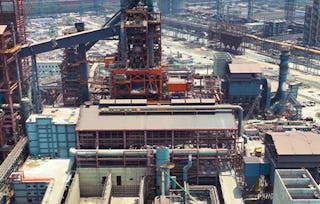
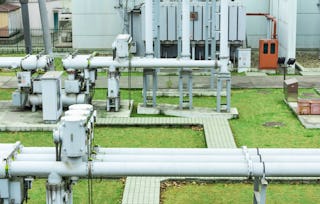
This course is designed for mechanical and chemical engineering professionals, faculty members, and students seeking practical and industry-relevant expertise in utility system design for process plants. The course provides an in-depth understanding of ETP design, covering primary, secondary, and tertiary treatment stages, contaminant removal technologies, regulatory compliance, water reuse optimization, and sustainable sludge management.

Gain next-level skills with Coursera Plus for $199 (regularly $399). Save now.

Design of Specific Systems
This course is part of Design of Utility Systems for Industrial Plants Specialization

Instructor: Subject Matter Expert
Included with
Recommended experience
Skills you'll gain
Details to know

Add to your LinkedIn profile
January 2026
3 assignments
See how employees at top companies are mastering in-demand skills

Build your subject-matter expertise
- Learn new concepts from industry experts
- Gain a foundational understanding of a subject or tool
- Develop job-relevant skills with hands-on projects
- Earn a shareable career certificate

There are 3 modules in this course
This specific course on the Design of Specific utility System Effluent Treatment Plant (ETP) course is designed to provide a comprehensive understanding of wastewater treatment processes used in industries to ensure environmental compliance and sustainability. The course covers the fundamentals of effluent treatment, including wastewater characterization, treatment stages (preliminary, primary, secondary, and tertiary), and advanced treatment technologies. Learners will learn about key components such as screening units, sedimentation tanks, biological treatment methods, filtration, and chemical treatment processes. Emphasis is placed on regulatory standards, energy-efficient treatment practices, sludge management, and wastewater reuse strategies. By the end of the course, learners will be equipped with the knowledge to design, operate, and optimize ETPs for various industrial applications, ensuring effective pollution control and resource recovery.
What's included
6 videos2 readings1 assignment9 plugins
The Safety Relief & Flare Systems course is designed to equip learners with the knowledge and skills required to design, operate, and maintain pressure relief and flare systems in industrial facilities. The course covers the fundamentals of overpressure protection, selection and sizing of relief valves, pressure safety devices, and flare system components. Key topics include regulatory compliance (such as API, ASME, and OSHA standards), risk assessment, relief load calculations, flare gas dispersion, and environmental considerations. Participants will also learn about flare stack design, knock-out drums, seal systems, and energy recovery techniques. By the end of the course, learners will be able to design efficient and compliant relief and flare systems that ensure plant safety, minimize emissions, and optimize operational reliability.
What's included
5 videos1 assignment8 plugins
The Miscellaneous Utility Systems in a Process Plant course provides an in-depth understanding of various support systems essential for the efficient and sustainable operation of industrial facilities. The course covers a range of systems, including Co-Generation (Co-Gen) plants, which produce both electricity and useful heat for industrial processes. It also addresses the design and operation of Oily Water Sewer (OWS) systems for treating and managing water contaminated with oil, ensuring with plant codes and environmental compliance. Additionally, the course explores Closed Blowdown (CBD) systems, which are used to manage and treat blowdown water from cooling towers and boilers, as well as Contaminated Rain Water (CRWS) systems that deal with water runoff from areas exposed to industrial pollutants. The course further delves into Rain Water Harvesting systems, focusing on the collection and storage of rainwater for reuse in process or non-potable applications. Participants will also gain insights into the operation of Incinerators for Industrial Waste Disposal, covering the safe and efficient disposal of hazardous and non-hazardous waste through high-temperature combustion. The course also includes an overview of Sugar Technology, emphasizing the unique utility systems in sugar production plants, including the management of steam, water, and waste. By the end of the course, learners will have the skills to design, implement, and maintain these specialized systems, ensuring environmental sustainability, energy efficiency, and compliance with industry regulations.
What's included
5 videos1 assignment15 plugins
Earn a career certificate
Add this credential to your LinkedIn profile, resume, or CV. Share it on social media and in your performance review.
Instructor

Offered by
Explore more from Mechanical Engineering
Status: Free Trial
Politecnico di Milano

Pearson
Why people choose Coursera for their career


Frequently asked questions
To access the course materials, assignments and to earn a Certificate, you will need to purchase the Certificate experience when you enroll in a course. You can try a Free Trial instead, or apply for Financial Aid. The course may offer 'Full Course, No Certificate' instead. This option lets you see all course materials, submit required assessments, and get a final grade. This also means that you will not be able to purchase a Certificate experience.
When you enroll in the course, you get access to all of the courses in the Specialization, and you earn a certificate when you complete the work. Your electronic Certificate will be added to your Accomplishments page - from there, you can print your Certificate or add it to your LinkedIn profile.
Yes. In select learning programs, you can apply for financial aid or a scholarship if you can’t afford the enrollment fee. If fin aid or scholarship is available for your learning program selection, you’ll find a link to apply on the description page.
More questions
Financial aid available,